
Meet Burt Weissbourd, author
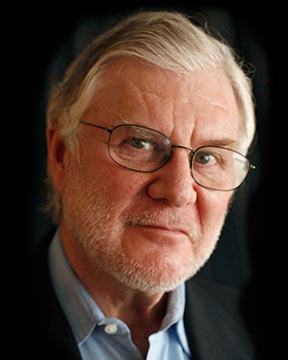
I write character-driven thrillers, including my latest novel: Hope Dies Last (Rare Bird Lit and Blue City Press, 2025). My earlier work includes: Danger in Plain Sight, Rough Justice, Out of the Past, Inside Passage, Teaser, Minos, and In Velvet.
How did I come to eagerly want to write character driven thrillers? It began years ago when I went to Hollywood.
I came to Hollywood in 1977 to produce feature films. I was 28 years old, I didn’t know anyone in the movie business, but I’d stumbled onto a timely idea — I was going to work with, and most importantly, back screenwriters. That is to say, stand behind their work — and I say this with hindsight — protect them from being rewritten, include them in the process of choosing a director, casting the picture, all of the decisions that go into making a feature film.
At that time, Writers Guild minimum for a high budget screenplay was $9,600. No, I’m not leaving out any zeros. You could hire the most accomplished screenwriter, if he or she agreed to work for the minimum, for $9,600. Also, screenwriters were at the bottom of the Hollywood food chain. Their screenplays were often rewritten at the whim of a star or a director or a studio executive. They weren’t often consulted about most of the important choices that go into making a movie.
Finally, it was a golden age in Hollywood — filmmakers were taking risks and studios were giving directors free reign to make daring movies. In this creative context, writers were eager to work on exciting projects, especially if they could stay with the project as it moved toward becoming a film.
In Chicago, I’d learned filmmaking working on educational films. I was the first one on and the last one off — doing everything from writing, to cinematography, to directing actors, editing, etc. But it was a big jump to producing feature films in Hollywood, so I went to business school and raised a small amount of money (less than $100,000) to go to Hollywood to finance screenplays.
I was young, optimistic, and emboldened by the films being made. I approached writers that I loved and made unconventional deals. I was successful enough developing screenplays, and attracting actors, that early on, studios were financing the screenplays I wanted to develop.
Early in my producing career, I had the privilege of working with author Ross Macdonald, a legend in crime fiction, on his only screenplay. Working with him, I began to see how characters could drive plot.
This was the New Hollywood (1967 -1980), and I worked with writers whose work grabbed viewers viscerally, not with explosions but with multi-dimensional characters that would draw you into a deeply moving story. I spent countless hours working out the stories and shaping the people in them. I worked with the following screenwriters, with some of their most famous works noted in parentheses: Frederick Raphael (“Two for the Road”), Alvin Sargent (“Ordinary People”, “Julia”), Andy Lewis (“Klute”), Joe Esterhas (”Basic Instinct”), Ron Bass (“Rain Man”), Stewart Stern (“Rebel Without a Cause”). William Wittliff (“Lonesome Dove,” Raggedy Man”), Larry D. Cohen (“Carrie,” “Ghost Story”), etc. (These writer’s film credits are for identification purposes. Excepting “Raggedy Man” and “Ghost Story,” I did not work on these films.) Working closely with these great screenwriters was a rare opportunity to learn how to create complicated characters and to see how these complex people enriched storytelling.
As I had some success, I began developing screenplays working directly with actors including: Robert Redford, Lily Tomlin, Goldie Hawn, Sally Field, and Jill Clayburg. I had a memorable trip to NYC to read a Frederic Raphael screenplay I had worked on with Diane Keaton and Al Pacino.
With hindsight, I can see how working with fine actors helped me later — I was able to draw complex, conflicted characters without being too heavy handed.
I am a voting member of the Academy of Motion Picture Arts and Sciences, and, as such, I spent a lot of time thinking about what makes good movies work.
I left Hollywood in 1987 — the golden age was over and I wanted to write. With hindsight, the best screenplays I’d worked on never got made. Nevertheless, it was a great experience. As a producer developing a screenplay, you learn to look for stories with strong, complex characters and a “rich stew” — that is to say a situation with conflict, emotional intensity, and the potential to evolve in unexpected ways. That is exactly how I approach the books that I write. I learned how to do that as a producer working on screenplays.